
Earning an engineering degree in Electrical & Electronics Engineering will open the door to many opportunities. In today's high-tech world, this engineering degree is a great foundation for careers in traditional engineering fields as well as for careers in management, sales, government, medicine, research, teaching, and more. A recent survey conducted by the Association of Electrical Engineers says that by 2010 there will be a requirement of more than 1,00,000 EEE graduates every year in India alone.
This lab is essential to get an overview of different types of power semi-conductor devices, and their switching characteristics. To know the need for voltage regulation in power supplies and describe the operation of both conventional and switching voltage regulators. Create an awareness of the general nature of Power electronic equipment;
This lab is essential to get an overview of different types of power semi-conductor devices, and their switching characteristics. To know the need for voltage regulation in power supplies and describe the operation of both conventional and switching voltage regulators. Create an awareness of the general nature of Power electronic equipment;
To know and verify the various electrical theorems and transient responces of the basic passive devices.
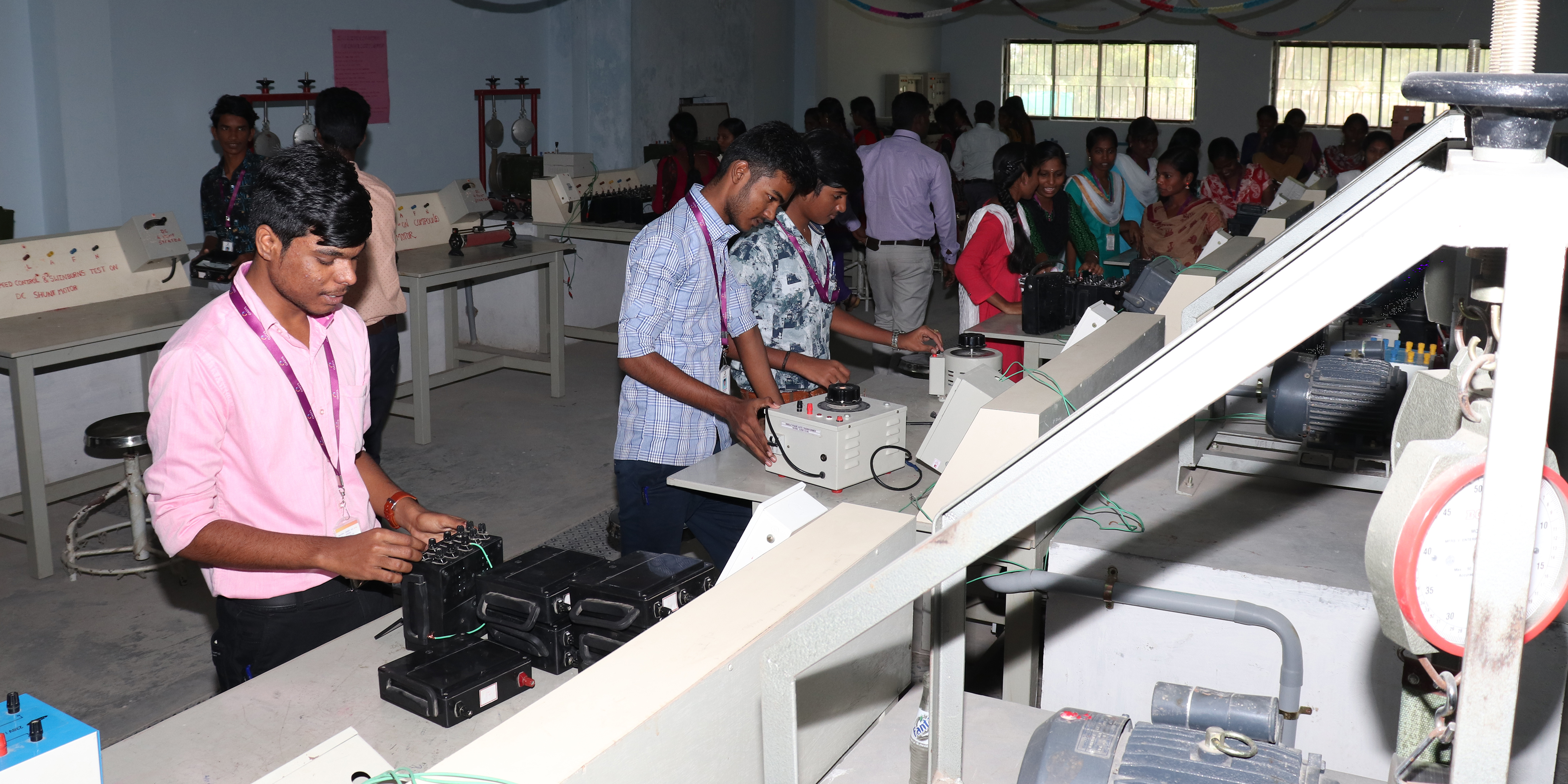
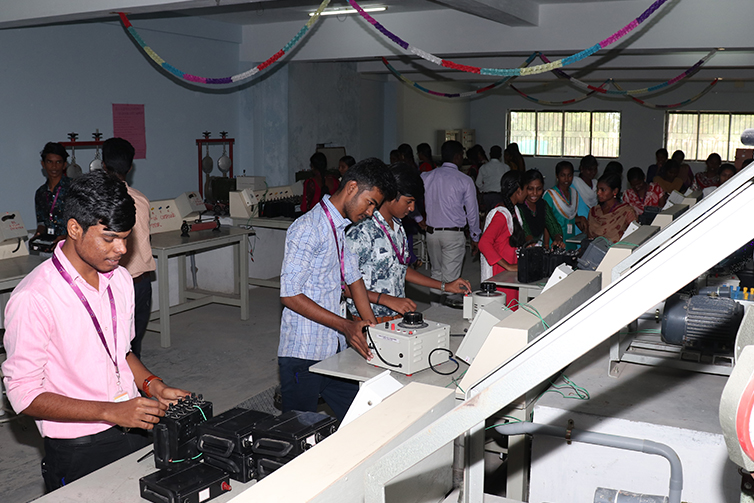
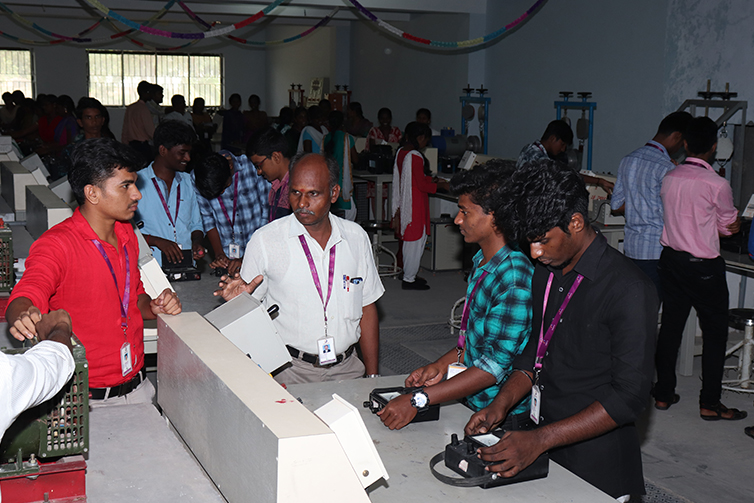
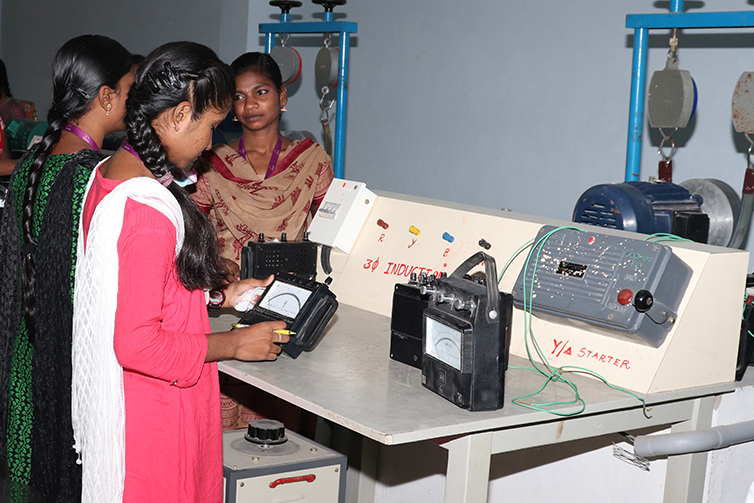
This is our main core lab Developing state-of-the-art machines and monitoring and diagnostics technologies to enable faster, greener ways to power, build and move the world.
The source of the concept of performance objectives, models behavior as an output emitted by an organism. Control theory suggests a different model, in which the stable patterns called behavior are perceptual variables stabilized against disturbances by variations in motor activities.."
The primary goal of the Simulation labs is to provide assistance to students that will enhance their chances of succeeding in technology-based assignments and to provide access to equipment that will support the needs of instruction where we celebrate life-long learning. The Simulation labs support the curriculum of the university and the assignments of the faculty.
It is the task of instrumentation and control engineers to research, design, install, develop, test and maintain instruments, electronics and computer control systems that are used in the process industry
We at OASYS Institute of Technology are committed to create disciplined and dynamic value based enterprising professionals, with global standards through quality education and training. Our intentions are to provide..